Khushdave
N/A
By Khushdave
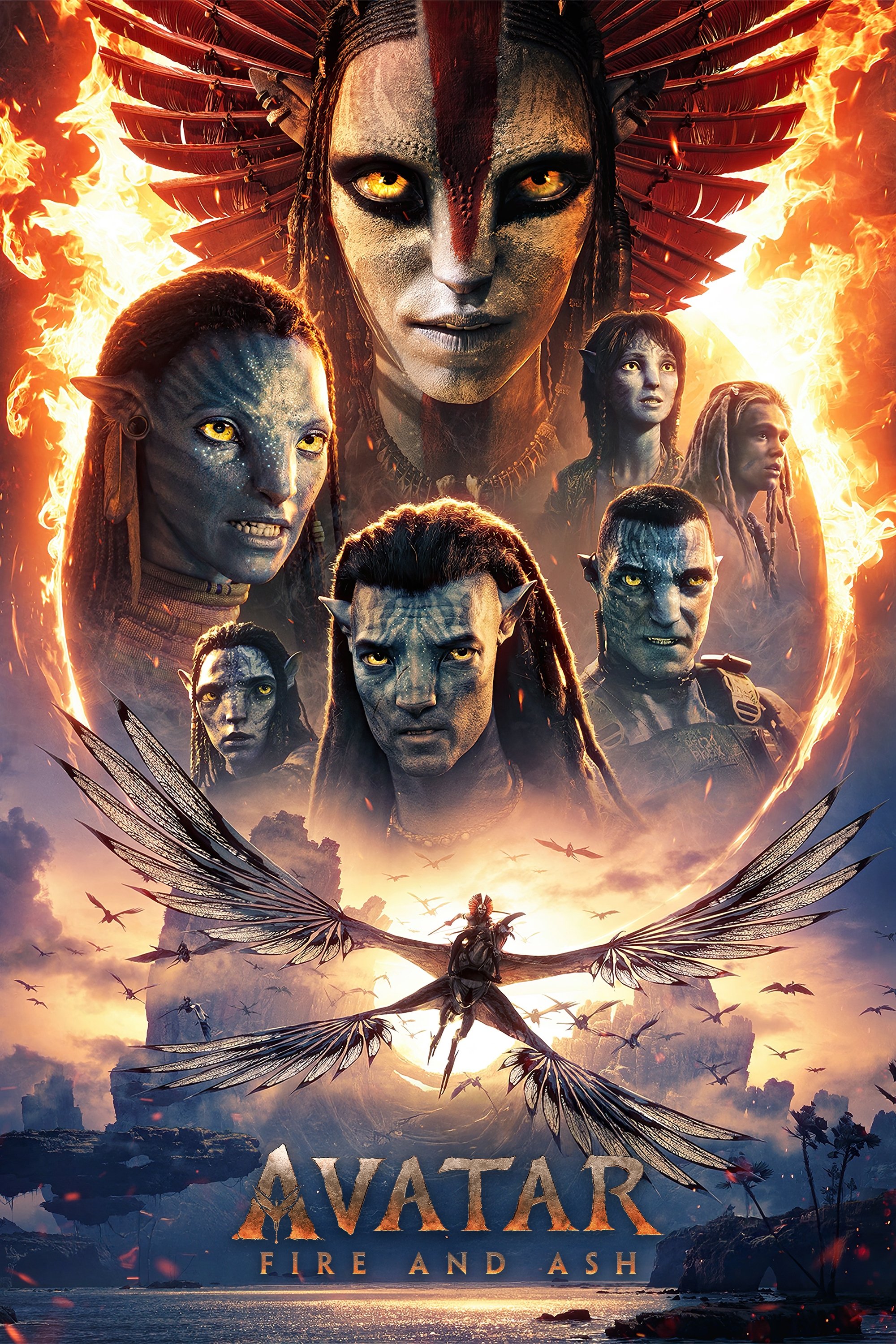
One of the first things that stood out to me was how feminine this film felt in the best possible way. Almost every major female character holds power, agency, or authority: the Tulkun matriarch, Ronal, Tonowari’s clan through Ronal’s influence, Kiri, General Ardmore, Varang, and especially Neytiri, who finally gets the screen presence she deserved after the first film. Across clans and factions, women clearly hold more power than men, and that thematic choice felt intentional and refreshing.
Visually, the film is absolutely staggering. The massive set pieces are some of the most impressive James Cameron has ever delivered. Bridgehead City and the Cove of the Ancestors are jaw-dropping, and for the first time since the original Avatar, I didn’t feel that uncanny disconnect between live-action elements and CGI. In The Way of Water, Spider occasionally felt like he didn’t quite belong in the frame. Here, that problem is gone entirely.
The human technology continues to be absurdly cool. The submarines, aircraft, ships, and industrial machinery are all terrifying and fascinating in equal measure. Cameron still knows how to make humanity’s tools of destruction visually seductive.
Kiri and Spider’s bond is finally made official, and that storyline is one of the film’s emotional cores. Spider, in particular, benefits enormously from the increased focus. After spending much of The Way of Water sidelined, he steps into the narrative in a big way. The sequence where Kiri gives him the ability to breathe Pandora’s air is genuinely suspenseful, even when you can guess where it’s going.
Lo’ak’s arc is one of the biggest improvements from the previous film. I wasn’t a fan of him in The Way of Water, where he often came across as reckless without understanding the consequences of his actions. Here, his growth feels earned and deeply affecting. His suicide attempt was shocking in the moment but makes painful sense in hindsight. Jake handles Neteyam’s death terribly and places much of his grief and blame onto Lo’ak, becoming an emotionally absent and often cruel father. Seeing Jake finally tell Lo’ak that he’s proud of him is one of the most satisfying moments in the film.
Varang and the Ash People are genuinely terrifying antagonists. A Mangkwan warrior becoming a suicide bomber to take down a Windtrader ship is one of the film’s most chilling sequences, as is the scene where they sever Na’vi kurus. Varang herself is a standout villain. Her rage is rooted in loss and starvation, in a childhood shaped by destruction and abandonment. She doesn’t believe Eywa will save anyone, and her trauma drives her toward annihilation rather than healing. She’s compelling precisely because she’s so damaged.
Quaritch continues to be one of the franchise’s most interesting characters. He evolves from insisting he’s “not that man” into slowly accepting himself as an upgraded continuation of his human self. Jake’s words to him during moments when they’re not actively trying to kill each other clearly get under his skin. His dynamic with Varang brings out the worst in both of them, but it feels more like a relationship of convenience than genuine bonding. Quaritch increasingly feels like a ghost with unfinished business, driven by an imprinted need to destroy Jake Sully even when it no longer serves him.
The scene where Jake is captured and put on display by the humans is incredibly effective. The voyeuristic curiosity of the crowd makes it feel suffocating, like you’re trapped in the box with him. Jake’s words to Quaritch in that moment are chilling.
Neytiri’s return to center stage is another highlight. Her scene freeing Jake is pure catharsis, reminding us why she remains one of the franchise’s most powerful figures.
The film works extremely well as a direct continuation of The Way of Water. There’s no need to pause for heavy exposition, and while that might frustrate some viewers, it reinforces the feeling that this is very much Part Two rather than a standalone chapter. In that sense, Fire and Ash retroactively strengthens The Way of Water, which ended in a somewhat unfinished place.
The revelation about Kiri feels inevitable and satisfying. She is a clone of Grace’s avatar, with no father, and appears to be Eywa incarnate or at least its physical manifestation. The choice to give Eywa a face that resembles Kiri reinforces that idea beautifully.
That said, the film is not without its flaws. Several major plot beats feel like rehashes of earlier films, particularly the final battle. Humans walk into an ambush, the Na’vi initially gain the upper hand, are overwhelmed by superior firepower, Eywa intervenes through wildlife, and the climax ends with a personal duel between Jake and Quaritch, this time with Spider as the third presence. Kidnappings also remain an overused narrative device.
Many side characters suffer due to the film’s ambition. Tsireya, Ronal, Tonowari, Aonung, and Rotxo were essential in The Way of Water, but here they’re largely sidelined. Rotxo’s death, in particular, feels underdeveloped and somewhat cheap. Ronal’s arc is disappointing as well. She’s mostly reduced to being pregnant and eventually dying, despite her strong presence in the previous film. Tonowari is barely given anything to do at all.
The Windtraders are another missed opportunity. David Thewlis’s Peylak is barely present, and the group disappears from the story far too quickly. It’s unclear whether Peylak is even alive by the end, and that ambiguity feels unearned.
There’s also a recurring issue where entire groups of characters seem to vanish during major battles. Just as the Metkayina disappeared during the climax of The Way of Water, large numbers of Na’vi seemingly evaporate here, despite clearly being alive in the aftermath.
Norm and Max fare slightly better than before, but the bar was extremely low. Given the lore revelations around Norm having a Na’vi family, it’s frustrating that this isn’t explored further.
The ending feels less complete than The Way of Water’s. Important reactions and consequences are missing, such as Tsireya and Tonowari learning about Ronal’s death, the fate of remaining RDA soldiers, and how Quaritch, Varang, and the Mangkwan escape. While Spider’s acceptance into Na’vi society is emotionally satisfying, it doesn’t fully compensate for the unresolved threads.
Looking ahead, there are many compelling questions. What happened to Quaritch and Varang, especially given Varang’s visible fear of Kiri? Is Ardmore alive? Who is “the Chairman” that Selfridge references? Was Garvin recording Jake’s imprisonment, and could that footage be used to expose the RDA back on Earth? Why does Eywa have a face, and why does it look like Kiri? And how long can Quaritch realistically remain the central antagonist as he drifts further from human command?
Spider’s future is particularly troubling. Neytiri tries to kill him multiple times across the last two films, and Jake attempts to ritually execute him. His question, “Do you still love me?” is heartbreaking. He desperately wants a family, yet both of his parental figures nearly murder him. His bond with Quaritch only complicates things further, creating emotional whiplash that feels intentional and painful.
Overall, I loved Fire and Ash. It’s beautiful, emotionally effective, and ambitious to a fault. It tries to juggle too many characters and storylines, and some inevitably suffer for it. Like the original Avatar, this film would benefit enormously from an extended edition with restored scenes. It barely feels like three hours, which suggests a significant amount was left on the cutting room floor.
Fire and Ash works best when viewed as the second half of The Way of Water rather than a standalone film. Together, they form a richer, more coherent narrative about grief, responsibility, and resistance. Even if Avatar 4 and 5 never happen, I hope we at least get extended editions to fully flesh out what’s already here.
Despite its flaws and It may not tell a particularly unique story, but it tells it beautifully, and the emotions land exactly where they’re meant to.